How to classify employees under awards

How to classify employees under awards

Latest News & Events

How to classify employees under awards

confused employer

The problem

Most employees in Australia are covered by a Modern Award. These set out the rates of pay applying to different occupations or work covered by that award as well as lots of other conditions of employment like allowances, penalty rates and overtime. Not complying with modern awards is a breach of the Fair Work Act and can attract very significant penalties as well as embarrassment with staff and in the broader community.  It is therefore very important that employers understand which Award covers the work their employees perform and what their entitlements are under those Awards.

A common frustration for employers is classifying employees. All Modern Awards have a classification structure that applies to employees based on the work they perform, a qualification they use for their work or a certain level of competency in the industry and via that classification structure the employees’ pay and entitlements are determined.

Generally, the way that you determine how employees are classified would be by doing the following:

Find the correct Modern Award

All Modern Awards have a coverage clause that dictates the type of work or industry that the terms of the Award apply to. While it may seem easy to identify the Award that covers employees based on the work of the employer there can often be stipulations or exemptions that mean certain employees or work are not covered by that Award. There can also be multiple awards applying to one employer.

For example, a civil construction business has a workforce that includes plant operators and labourers, forepersons, managers, engineers, surveyors, estimators, clerical staff, mechanics and truck drivers. That means that the following Awards would apply to various staff:

  • The Building and Construction General On-site Award 2020 
  • The Professional Employees Award 2020
  • The Surveying Award 2020
  • The Manufacturing and Associated Industries and Occupations Award 2020
  • The Clerks – Private Sector Award 2020
  • The Road Transport and Distribution Award 2020 and
  • The forepersons would be award-free.

So what you need to do is look for awards that might cover your particular industry and then awards which might cover particular occupations or capacities that you employ people in.

Classifications

After determining which Award applies to your business you then need to match your employees against the classification structure.

Each Award defines ways that employees are classified against a pay scale. There is no universal classification structure and different Awards do it in different ways.

Some of the different classification structures include:

  • Competency based – Employees are assessed against a competency system and once they prove competent at certain tasks or jobs they would move up the classification structure. i.e. an employee that can perform three tasks competently is more valuable that one who can only perform two.
  • Work based – This system matches employees against the highest value work or task that they perform in the classification structure. For instance, an operator of an excavator would have a higher classification depending on the amount in tonnes that it can hold in its scoop.
  • Qualification based – Employees in fields where a certain level of education is required will be classified based on the highest level of qualification that they are required to use during the course of their work. This is common in fields like IT, accounting, and medical professions among others.

After you have determined which level an employee fits into you can then work out what their pay and entitlements are under the Award.

While we lay it out as simply we can here this can be a daunting task especially when some employers have little knowledge of Awards and how they work.

Need help?

Give us a call on 0438 533 311 or email enquiries@ridgelinehr.com.au to arrange your free first consultation to see how we can help with advice and support on this or any other HR matter

CONTACT US

Ridgeline Human Resources Pty Ltd
ABN : 24 091 644 094

enquiries@ridgelinehr.com.au

0438 533 311

PARTNER LINKS

TELL US WHAT YOU NEED HELP WITH

Using PERMAH for your POSITIVE DUTY

Using PERMAH for your POSITIVE DUTY

Latest News & Events

Using PERMAH for your POSITIVE DUTY

example flexible working arrangement

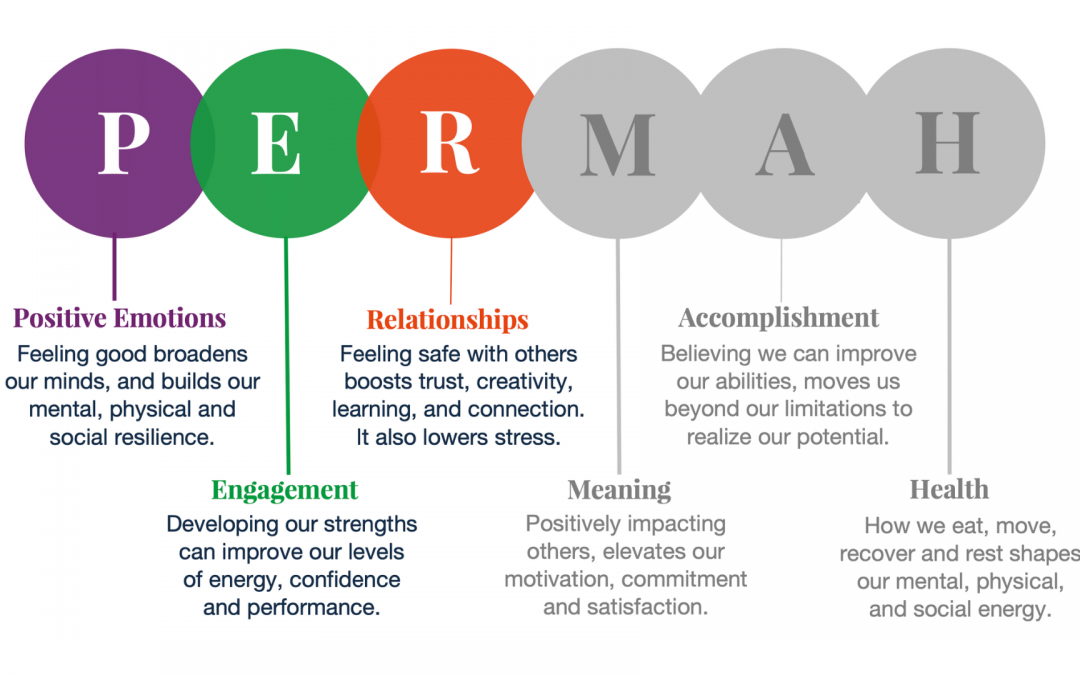
Above image is courtesy of The Wellbeing Lab/Michelle McQuaid Group.


Background

Under Workplace Health and Safety laws, a positive duty to eliminate or control psychosocial hazards has been imposed on all persons conducting a business or undertaking.

This means that the traditional compliance approach of issuing a policy and procedures, providing them to workers, requiring their compliance with them and acting on incidents or breaches when they are reported is not adequate any more.

It is necessary to conduct a thorough risk assessment to see whether any risks from each of the 14 psychosocial hazards in the Model code for managing psychosocial hazards published by Safe Work Australia and as set out in legislation enacted by each State or Territory.

There is also a duty to consult workers at each stage of the process and especially in relation to identifying risks and designing and implementing control plans and measures. 

One way to start addressing both the risk assessment and consultation obligations is to survey workers with an appropriate survey instrument. Our choice to do that is the PERMAH Workplace Wellbeing Survey.

Why have we chosen PERMAH?

The PERMAH workplace wellbeing framework is based on the ground-breaking wellbeing theory developed by Professor Martin Seligman as published in his celebrated work “Flourish”.

The PERMAH survey tool has been used by the Australian Human Resources Institute since 2018 as a national workplace wellbeing benchmarking tool and Small Business Victoria as the centrepiece of its small business wellbeing programs.

A unique feature of the PERMAH Survey is that every person who does the survey gets their own individual State of Wellbeing Report plus a template for developing a wellbeing plan plus access to a heap of wellbeing resources….all for free.

Organisations with 30 or more employees can acquire an annual licence and obtain organisational reports which show the aggregated findings on wellbeing in the organisation through the eyes and experiences of its people.

We have a team of people who have undertaken Certificates in Creating Wellbeing and in Leading Psychological Safety and Care and are accredited to debrief people on their PERMAH Survey results.

With the advent of the positive duty to eliminate or control psychosocial hazards, the survey has been augmented with a panel of additional questions specifically related to each of the 14 psychosocial hazards detailed in Safe Work Australia’s model code.

So we believe that the PERMAH Workplace Survey with the Psychosocial Hazard Panel Add-on ticks all of the boxes – it is science-based, it has credibility being used nationally by AHRI, it is affordable, it provides free and practical wellbeing advice and resources to everyone who does it and it addresses the psychosocial hazards in a practical and cost effective way.

How we can we help

Our “Using PERMAH for Positive Duties” service incorporates the following elements:

  • A 12 month licence for the PERMAH Workplace Wellbeing Survey including the add-on psychosocial hazard panel.
  • Ability to undertake the survey as an organisation multiple times during the licence period.
  • Templates and an animated video for communications to employees on the PERMAH Workplace Wellbeing Survey, why your organisation is doing it and how employees can participate.
  • Professional analysis of survey results, provision of a supplementary report and management debrief on the results.

We have the flexibility to package these elements in a variety of ways and to undertake other services such as individual PERMAH debriefings, training programs and facilitated sessions with leadership groups or consultative or safety committees.

Where to now?

If you would like to learn more about the positive duty to eliminate or control psychosocial hazards and your options for addressing it, we’ll be happy to advise you. Just give us a call on 0438 533 311 or email enquiries@ridgelinehr.com.au.


CONTACT US

Ridgeline Human Resources Pty Ltd
ABN : 24 091 644 094

enquiries@ridgelinehr.com.au

0438 533 311

PARTNER LINKS

TELL US WHAT YOU NEED HELP WITH

Managing disconnection from work

Managing disconnection from work

Latest News & Events

Managing disconnection from work

example flexible working arrangement

The impending legislated right for workers to disconnect from work outside their contracted working hours has the usual subjects again yelling that “the sky is falling” on employers.

The thrust of the proposed changes is to discourage employers from making unreasonable contact with or demands on their employees outside their contracted working hours, to provide for people to be paid for time worked outside their contracted working hours and to have access to the Fair Work Commission to make their employer stop making unreasonable connection with or demands on them outside their contracted working hours if the Commission finds the employer to be doing so.

There will be exceptions such as if the contact is due to an emergency or for welfare purposes. People who have roles that require them to be on call as a normal feature of their job won’t be an issue as long as the connection is reasonable in that context.

It has also been made clear by the Minister that it would be reasonable to contact relevant employees if a worker did not attend work and the employer needed someone to take their place or for normal rostering purposes.

Of course, if the contact is unreasonable, that might well constitute an unreasonable job demand in any case and therefore constitute a risk arising from a psychosocial hazard under Workplace Health and Safety laws.

Do you need to contact your employees outside their contracted working hours?

For the vast majority of workplaces, the answer is probably “no, other than in the case of an emergency or for welfare purposes” – just what the proposed legislative change says.

Sure, there will be times when you are working into the night and want to get an email off to an employee for their  attention when they come in in the morning ….. but you don’t need them to see it tonight so either delay sending it until the morning or use the scheduling facility on your email service for it to automatically go to the employee’s inbox at the start of their day in the morning.

It really is that easy to manage in most cases.

What about if the employee wants a flexible working arrangement?

One of the arguments that the naysayers are putting up is that this right to disconnect will adversely affect employers’ willingness to offer flexible working hours or hybrid working arrangements.

One of the things that should be covered off in the discussions and agreement about a flexible working arrangement is how communications and connection are going to be managed by the employer and the employee.

For example, let’s say a single mum who is an accounts clerk asks for a flexible working arrangement under which she would work from 9.30 am to 2.30 pm each day and from 8.00 pm to 9.30 pm each night so that she could manage her parental responsibilities in the morning up to school drop off time and from school pick up time through to the children’s bedtime. She might come into the office in the day and do the night work from home.

The arrangement with the night work might be that she can perform tasks which do not require interaction with others (eg data entry, accounts processing, etc) but that anything requiring contact with another person is to be done either by a scheduled email issuing the following morning or deferring that item until she came into the office the next day. 

You should Include that communications protocol in the flexible working arrangement agreement to ensure that it is understood and complied with.

And guess what? That pattern of hours of work becomes that employee’s contracted hours of work so there isn’t an issue of a need for that employee to disconnect in any case because they are working.  

Again, it really is that simple to manage in most cases.

Do you really want to be contacting your employees outside their contracted hours?

Because we live in such a digitally connected “look at it now” world, if you send something to an employee outside their contracted working hours, there are many who will not be able to resist having a look.

If, by having a look, that raises something for them that creates some level of anxiety and that in turn interferes with their state of mind and/or their sleep and/or their leisure time/rest and recovery and/or the relationship with their partner……..well, do you really want an anxious, tired, sleep deprived employee coming into work the next day?

The answer should be self-evident.

Other considerations

As noted above, a failure to ensure that there is no unreasonable connection with employees outside their contracted working hours could give rise to risks associated with psychosocial hazards and Workplace Health and Safety laws require employers to exercise a positive duty to eliminate or control such risks. There are a number of psychosocial hazards that could come into play in this regard. We have a blog and explainer video on each of the 14 psychosocial hazards on our website – you can access them here

Additionally, the Fair Work Commission has just begun a review of modern awards with respect to “Work and Care” and the issue of disconnection from work will no doubt be a prominent issue in considerations in that review. See https://ridgelinehr.com.au/award-review-on-work-and-care-underway/

We will keep you informed of further developments as they occur and ensure that we tell you what the real effects of legislative changes are rather than what the scaremongers would have you believe.

If there is anything here that resonates with you and you would like to explore further, give us a call on 0438 533 311 or email enquiries@ridgelinehr.com.au. We would love to have a chat about it.


CONTACT US

Ridgeline Human Resources Pty Ltd
ABN : 24 091 644 094

enquiries@ridgelinehr.com.au

0438 533 311

PARTNER LINKS

TELL US WHAT YOU NEED HELP WITH

Award review on “work and care” underway

Award review on “work and care” underway

Latest News & Events

Award review on “work and care” underway

example flexible working arrangement

Yesterday, the Fair Work Commission commenced its new “Work and Care” Review of Modern Awards which, on face value, could bring about the most substantial and biggest range of changes to our modern awards for decades.

When modern awards were created back in 2009, they were essentially a merger and rationalisation of thousands of pre-existing Federal, State and Enterprise-based awards leading to the 121 modern awards that we have today. 

This “Work and Care” Review has its origins in a Senate Inquiry into Work and Care established in 2022 which led to the Minister for Employment and Workplace Relations instructing the President of the Fair Work Commission to initiate the review.

The Fair Work Commission has issued a discussion paper which sets out the terms and process of the review and addresses relevant recommendations made by the Senate Committee and some other matters. It also has a comprehensive set of questions on the variety of matters to be considered in the review. You can access the report here.

The Senate Committee’s recommendations

Here is summary of the relevant recommendations of the Senate Committee as presented in the FWC discussion paper which shows how far reaching changes could be:

  • An enacted right to “disconnect from work” enabling and supporting productive work from home and flexibility of work, protecting workers’ rights to disconnect from their job outside their contracted hours, reinforcing that right with employers and applying a positive duty on employers to reasonably accommodate the right wherever possible;
  • Amending the Fair Work Act to provide improved rostering rights for employees and, in particular, working carers, by requiring employers to implement rostering practices that are predictable, stable and focused on fixed shift scheduling (eg fixed times and days) and increasing employers’ existing obligations to genuinely consider employee views including working carers on the effects of roster changes and  other work arrangements;
  • Conducting a work value case in care sectors including early childhood education, aged and disability care and sectors covered by the SCHADS Award with a range of entitlements specifically mentioned eg payment for work-related travel time, administrative responsibilities and essential training and a minimum shift call-in time;
  • Extending the definition of “immediate family” for carer’s leave purposes to include any person who has been a member of the employee’s household for at least 18 months, an employee’s children including adopted, step and ex-nuptial children, an employee’s siblings or the siblings of an employee’s spouse or de facto partner or any other person significant to the employee to whom the employee provides care;
  • Consideration be given to the adequacy of existing leave arrangements including separate carer’s leave and annual leave;
  • Reviewing access to and compensation for paid sick leave and annual leave for casual and part-time workers;
  • Requiring employers to provide at least two weeks’ notice of roster changes, to genuinely consider employees’ view on the impact of roster changes and to accommodate the needs of employees plus an employee “right to say no” to extra hours with protection from negative consequences;
  • Reviewing the operation of the 38 hour week with consideration of stronger penalties for long hours and other possible ways to reduce them including through the work health and safety system to ensure safe working hours;
  • Introducing an enforceable “right to disconnect from work, restricting employers from communicating with workers outside their contracted hours except for emergency or welfare reasons plus increase penalties for wage theft for unpaid additional hours;
  • Introducing mandatory annual reporting of companies with 20,000 or more employees in Australia on workplace practices to ensure roster justice and flexible working arrangements and related collection of data on requests for flexible working arrangements made and shift roster changes;
  • Developing a new statutory definition of casual employment that is restricted to work that is genuinely intermittent, seasonal or unpredictable and restricting the use of “low base” contracts, ensuring part-time employees have access to regular and predictable patterns and hours of work with consideration of penalty rates for work outside contracted hours;
  • Developing standard definitions of full-time and part-time employment for inclusion in the Fair Work Act 2009;
  • Undertaking a review of standard working hours with a view to reducing the standard working week.

Please remember that these are just recommendations which are to be considered in the review being undertaken by the Fair Work Commission. Some of the items require legislative change and that would be up to the federal government to negotiate through Parliament. So it will be a while before we know exactly what any award or legislative changes that flow from the Senate Inquiry will look like in real terms.

What this all means

The last year and a bit have delivered far more change in workplace relations law and employment rules via legislation, modern award reviews and decisions made by the Fair Work Commission and the Courts than we have seen in years.

This review tells us that we can expect more of the same in the years ahead.

The other element here is the WHS one that is noted in relation to extended working hours but equally links the positive duty to eliminate or control psychosocial hazards, many of which can be connected to some of the recommendations of the Senate Inquiry – eg around remote work, organisational justice, reward and recognition, job demands, etc.

The positive duties are progressively being rolled out across the country via State and Territory legislation.

For this reason, it is important to consider the agenda here in that broader context and the smartest way to do that is to consider whether any of the issues raised here are demonstrative of an issue in your workplace and the need for you to do something about that.

Conversely, have a think about whether you already accommodate some of the items raised here or perhaps you could actually do so. Remember that the Fair Work Act and modern awards provide minimum standards and there is nothing that should stop you from considering what you might be able to offer more than those in any way.

Given the challenges that we have in both accessing the talent we need for our businesses and looking after our own and our employees’ wellbeing, anything we can do over and above those minimum standards helps us on both counts.

You could also consider negotiating an enterprise agreement with your employees delivering on some of those above award benefits and using that as a public validation of your commitment to your people/your Employer Value Proposition. There might also be some changes that you want to make that are not allowed for under the relevant Award and so an enterprise agreement might be useful legally validate and protect desired changes.

We will monitor developments in the review and communicate further as and when developments occur.

If there is anything here that resonates with you and you would like to explore further, give us a call on 0438 533 311 or email enquiries@ridgelinehr.com.au. We would love to have a chat about it.


CONTACT US

Ridgeline Human Resources Pty Ltd
ABN : 24 091 644 094

enquiries@ridgelinehr.com.au

0438 533 311

PARTNER LINKS

TELL US WHAT YOU NEED HELP WITH

Because it is PEOPLE BUSINESS

Because it is PEOPLE BUSINESS

Latest News & Events


Because it is PEOPLE BUSINESS

example flexible working arrangement

A few months ago, I attended a business breakfast where the owner of a HR consulting business was presenting on the HR essentials that she believed every business needs to nail the HR stuff.

What was put forward was a holy triumvirate consisting of an employee handbook, position descriptions and employment contracts – put them in place and you are covered was the message that she gave. Could it really be that simple?

These are all useful tools and they are all in my toolkit but they are just tools – they aren’t solutions.

So my answer to that question is a resounding “no, it is far from that simple!”.

Over the years, I have spoken with lots of HR practitioners who told me that they can write policies and procedures and employment contracts and job descriptions. When I put on my SMB owner’s hat and ask them why I would want more paperwork, many struggle to answer the question.

You see the problem is that, in the corporate world, these types of document are often seen as solutions rather than what they really are – just tools. The thinking is that we just do a new policy, run an education program to tell people what the new rules are and we have covered things off – problem solved! No it isn’t and this is one of the reasons why the new positive duties to eliminate sexual harassment and psychosocial hazards have been introduced.

SMBs are all about people and relationships – sure you need some process but it is mostly about how a small team works together (provided of course that you give them the right tools to work with).

SMB owners aren’t commonly experts on employment law or relationship management or mental health and well-being or neuroscience and this is the stuff that they really need help with ie it is PEOPLE BUSINESS and quite a range of it.

What should you as an SMB owner be looking for in a HR consultant?

Here are my thoughts – someone who:

  • Knows their stuff when it comes to Fair Work and other employment laws and modern awards and legal due process and
  • Exercises curiosity with emotional intelligence and excellent listening skills to really understand issues and perspectives and
  • Is creative in tailoring the right solutions for the situation, the team and the business and
  • Has the flexibility to wear different hats (eg as a coach or consultant or contractor or counsellor) as appropriate to the situation and
  • Acts with integrity and earns the trust of the business owner and team members and
  • Acts with kindness and compassion to help and support people and
  • Has an established network of quality employment lawyers and other specialists to help with specific issues and
  • Has a sense of humour and enjoys a bit of fun along the way. 

If your HR Consultant ticks all of those boxes, you have a good one.

If they don’t, perhaps you should give us a call on 0438 533 311 to see how we might be able to help you better with your PEOPLE BUSINESS. 


CONTACT US

Ridgeline Human Resources Pty Ltd
ABN : 24 091 644 094

enquiries@ridgelinehr.com.au

0438 533 311

PARTNER LINKS

TELL US WHAT YOU NEED HELP WITH

New rules for fixed term contracts

New rules for fixed term contracts

Latest News & Events

New rules for fixed term contracts

example flexible working arrangement

Do you utilise fixed term contracts in your business?

If so, you will need to comply with new controls on fixed term contracts that the Federal Government has legislated under the Fair Work Legislation Amendment (Secure Jobs, Better Pay) Act 2022.

The changes take effect from 6 December 2023.

Limits on fixed term contracts 

The legislative change limits the use of fixed term contracts for the same role to a maximum of  two years (including renewals) or two consecutive contracts – whichever is shorter.

So, for example, if an employee has two back-to-back fixed term contracts of 6 months each, the maximum engagement on fixed term contracts would be 12 months because there are two contracts and the aggregate period is less than 2 years.

On the other hand, if an employee had two back-to-back contracts of 18 months each, the maximum period of engagement would be 2 years.

Once an employee continues in employment beyond the available limit on fixed term contracts, they will be deemed to be a permanent employee.

The new rules will only apply to new contracts entered into on or after 6 December 2023 but any pre-exisiting fixed term contract will count for the purposes of assessing whether there have been more than two contracts.

Exceptions

There are a range of exceptions that allow fixed term contracts beyond these limits and these include:

  • performing a discrete task for a fixed period,
  •  apprentices and trainees,
  • undertaking essential work during a peak demand period (such as a harvest),
  • temporarily replacing another employee on long leave (such as parental or workers compensation leave), or
  • where the employee has a remuneration level above the high income threshold ($167,500 from 1 July 2023).

Any such exceptions will have to be genuinely necessary and appropriate for the particular circumstances.

Exemptions also apply where fixed term contracts are permitted by an applicable modern award, and the Minister can make regulations to exempt certain types of contracts, for example toaddress sector specific arrangements.

Dispute resolution

Where employees and employers have a dispute about a fixed term contract that cannot be resolved at the workplace level, the Fair Work Commission is empowered to resolve them via conciliation, mediation or consent arbitration. In addition, the Federal Circuit and Family Court of Australia and Magistrates Courts can deal with disputes under the small claims procedure.

Fixed Term Contract Information Statement

Employers are required to provide a Fixed Term Contract Information Statement (the Statement) to all employees entering a fixed term contract. The Statement will be developed by the Fair Work Ombudsman and will set out details on the fixed term contract limitations, exceptions and the dispute resolution procedure. 

Conclusion

If you use fixed term or maximum term contracts in your business, you need to review those against the new rules and ensure that your policies and processes and contracts comply with the new legislative requirements.

If you are going to continue using fixed term contracts, you need to ensure that your processes include provision of the Fixed Term Contract Information Statement to be produced by the Fair Work Ombudsman. 

Need help?

  • Give us a call on 1300 108 488 to arrange your free first consultation to see how we can help with advice and support on this or any other HR matter

CONTACT US

Ridgeline Human Resources Pty Ltd
ABN : 24 091 644 094

enquiries@ridgelinehr.com.au

0438 533 311

PARTNER LINKS

TELL US WHAT YOU NEED HELP WITH