Beyond Compliance: The Construction Culture Standard

Beyond Compliance: The Construction Culture Standard

Latest News & Events

Beyond Compliance: The Construction Culture Standard

money changing hands

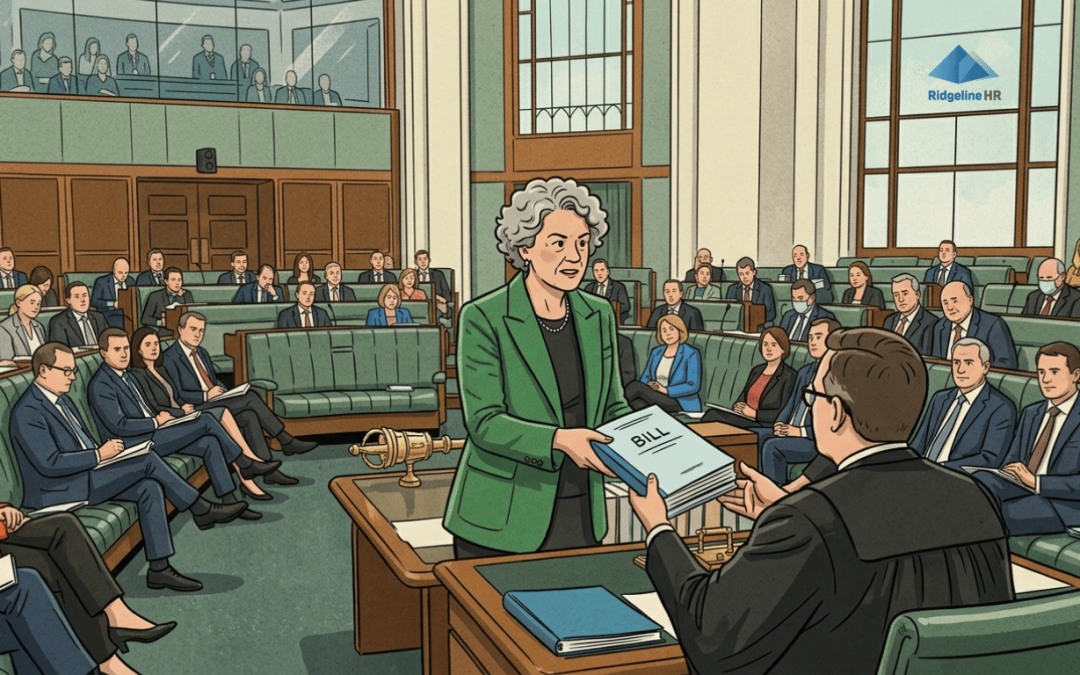
A few years ago a Construction Industry Culture Taskforce was established via a collaboration between the Australian Constructors Association and the NSW and Victorian Governments with the help of a few academic experts. That has led to the creation of a Culture Standard for the industry with the aim of improving the character of the industry relative to mental health, gender equality and life balance 

Background

As the construction industry faces mounting pressure to deliver critical infrastructure, it has reached a crossroads. Issues like chronic overwork, high suicide rates, and a severe lack of diversity are no longer just “part of the job” – they are systemic risks costing the Australian economy approximately $8 billion annually.

That’s why the Construction Industry Culture Taskforce (the CICT) was formed – to look at what the key barriers are that need to be overcome to create a better industry culture and to devise ways to overcome these barriers.

That work undertaken by the CICT has led to the release of the 2025 Culture Standard for the Construction Industry. This framework is designed to move the industry from “whispering” about health to making it a core pillar of project success.

 What is the Culture Standard?

The Culture Standard is a procurement-based framework that establishes clear requirements for how construction projects should be managed to prioritise people. It is built upon three interrelated pillars:

  • Wellbeing: Prioritising mental health through stigma-free support programs and schedules that manage workload pressures. 

  • Time for Life: Ensuring workers have adequate rest by targeting a 5-day work week (5 days in 7), capping hours at 50–55 per week, and providing consecutive days off 

  • Inclusion & Diversity: Creating workplaces free from offensive material, providing proper amenities, and setting transparent targets to increase female participation and close gender pay gaps.

Why was it developed?

The industry’s current performance in these areas is among the poorest in Australia. Key drivers for the Standard include:

  • The Wellbeing Crisis: Construction workers face suicide rates double the national average, with 75% reporting high stress.

  • The Diversity Gap: As the most male-dominated industry in the country, construction is missing out on a massive talent pool during an acute labor shortage.

  • The Productivity Myth: Research from CICT pilot projects proved that reducing hours does not harm productivity; instead, a rested workforce is safer and more efficient.

How will it be used?

The CICT’s goal is for the Standard to become a mandatory part of public sector procurement and the Australian Constructors Association has been lobbying governments to adopt it for that purpose. This would mean that:

  • Clients (government agencies) would prioritise the Standard in requests for tenders.
  • Contractors would need to demonstrate exactly how they will meet the Standard’s requirements as part of their bid.
  • Compliance would be monitored throughout the project life cycle, from delivery to handover.

How to implement the Culture Standard

Successful implementation requires a shift in how projects are planned and led:

  • Project Scheduling: Instead of 6- or 7-day site operations being the default for workers, schedules must be built around a 5-in-7 model with “healthy programming” that allows for recovery.

  • Flexibility Plans: Each project must develop and promote a specific “Project Flexibility Plan” to support workers with personal and family commitments.

  • Leadership Commitment: Leaders must move beyond “safety banter” and proactively advocate for the Standard, ensuring mental health first aiders are available and that gender-biased hiring is eliminated.

How this interacts with positive duties

In recent years, new positive duties have been legislated federally and by each State and Territory to eliminate or reduce risks from psychosocial hazards. Many of these hazards relate directly to the three pillars in the standard (wellbeing, time for life and inclusion and diversity).

A positive duty to prevent sexual harassment and gender-based behaviour and related victimisation and workplace environmental factors is also in place under both federal land State legislation.

So there are already multiple statutory duties on employers and others to address the issues that the Culture Standard has been developed to fix.

Other related duties

In addition to those positive duties, organisations with 100 or more employees have to lodge annual returns on Gender Equality/Pay Gaps with the Workplace Gender Equality Agency and this year, organisations with 500 or more employees have to provide plans detailing targets and action plans for improvement against these targets.

The WGEA publishes information on every respondents’ pay gap each year.

Our thoughts

We have been providing HR service to construction businesses for over 25 years and we are well aware of the challenges that the industry has in each of the 3 pillars in the Culture Standard.

We believe that the right approach to addressing the positive duties to eliminate or reduce risks from psychosocial hazards and to prevent sexual harassment and gender-based behaviour will go a long way towards addressing the matters contained in the Culture Standard.

Mostly, it requires a fundamental change in the way that industry stakeholders think and act. That starts with government and major (head) contractors in how they design work and engage others (eg sub-contractors and other service providers). Educating them and creating a psychologically safe environment for them to engage in the conversation and be part of the solution is critical.

How we can help

Ridgeline HR has been helping organisations including many construction businesses with compliance and cultural matters since 2000.

We have a strong record of working effectively with Government and with industry associations as well as in conducting compliance and cultural assessments of client organisations.

We can help you to design and implement an integrated cultural change program that will address your obligations as set out above and will help you to demonstrate that your organisation meets the Culture Standard. 

Our Practice Leader, Peter Maguire, is available to facilitate discussions with your management group or your Safety or Consultative Committee to work through these questions and tailor the right approach for your business and your people.  If you would like to know more about this, please let us know via the Contact Form below.


CONTACT US

Ridgeline Human Resources Pty Ltd
ABN : 24 091 644 094

enquiries@ridgelinehr.com.au

0438 533 311

PARTNER LINKS

TELL US WHAT YOU NEED HELP WITH

Adult juniors to get adult wages

Adult juniors to get adult wages

Latest News & Events

Adult juniors to get adult wages

money changing hands

Lots of modern awards and enterprise agreements have junior rates of pay typically applying to workers who are under 20 or 21 years of age who don’t get a full adult wage for the work that they do. In a landmark decision, the Fair Work Commission has decided that that has to change for at least some of them.

About the case

On 6 June 2024, the Shop, Distributive and Allied Employees’ Association (SDA) applied to change junior rates, seeking to increase rates of pay for employees aged 20 years old and under in the following 3 awards:

  • Fast Food Industry Award 2020
  • General Retail Industry Award 2020
  • Pharmacy Industry Award 2020

Part of the rationale behind the application is that employees who are 18 years or older should receive full adult rates because they are treated as adults in so many other aspects of law and life. For example, when you reach 18 years of age, you can legally:

  • Vote in elections (you must enrol with the Australian Electoral Commission)
  • Stand for public office (with some age limits for certain roles)
  • Serve on a jury if called
  • Be treated as an adult in the legal system (no longer a minor)
  • Enter into legally binding contracts (leases, loans, phone plans, etc.)
  • Open and control your own bank accounts and finances independently
  • Buy and consume alcohol legally
  • Purchase tobacco products
  • Enter licensed venues like pubs and clubs without a guardian
  • Apply for a full (unrestricted) driver licence (after meeting state requirements)
  • Travel independently and apply for an adult passport
  • Get married without parental consent
  • Make your own medical decisions
  • Create a will
  • Be fully responsible for debts and legal obligations

It is a fairly compelling argument.

About the decision

The Full Bench has decided that:

  • after 6 months’ experience, the rates payable to adult junior employees will be set at a rate of 100% of the full adult rate of pay
  • the current percentage rates for adult junior employees with less than 6 months’ experience with their current employer will stay the same
  • there will be no change to junior rates for persons aged under 18.

About implementation

The Full Bench has proposed that the decision be implemented in phases through a series of adjustments of 5% made on and from 1/12/26, 1/7/27, 1/12/27, 1/7/28, 1/12/28 and 1/7/29 with the effect of:

  • The rate for 20 year olds going from the current 90% to 100% on 1 July 2027
  • The rate for 19 year olds going from the current 80% to 100% on 1 July 2028
  • The rate for 18 year olds going from the current 70% to 100% on 1 July 2029

The Full Bench has called for submissions on the proposed implementation method but we see little likelihood of it changing and confirmation should be expected in the not too distant future.

Thoughts?

We have a few:

  1. As noted above, an employee who is in their first 6 months of employment is not eligible for these increases. So it would appear that the junior rates for 18 to 20 year olds will stay in the awards and it will be up to employers to increase their wages to the adult rate once they complete six months service. Just one extra layer of complexity and another administrative task to deal with.
  2. These increases will of course apply on top of award wage increases from Annual Wage Reviews that take effect from 1 July each year which will mean a double whammy of those increases and the Adult Junior adjustments from the same date in the next 3 years.
  3. Now that this decision has been made, we can expect a raft of applications to vary every other award with rates for juniors or unapprenticed youths and that these adjustments will flow fairly automatically to those other awards.
  4. For female dominated industries where award rates have recently been increased significantly on work value and gender equality grounds and there are junior rates (eg in the Children’s Services Award 2020), there is a compounding effect.
  5. Other award variations are likely to be necessary eg with adult apprentices which are based on the premise that an adult is at least 21 years old.
  6. The next test case might perhaps be on rates for trainees and apprentices – we will have to wait and see,
  7. If you have an enterprise agreement with junior rates in it, you will need to prepare to change that in your next agreement because the Better Off Overall Test will require that. 

If you need a hand working through what this all means for your business, send us a message through the “Tell us what you need help with” form below.


CONTACT US

Ridgeline Human Resources Pty Ltd
ABN : 24 091 644 094

enquiries@ridgelinehr.com.au

0438 533 311

PARTNER LINKS

TELL US WHAT YOU NEED HELP WITH

Changing gears on consultation

Changing gears on consultation

Latest News & Events

Changing gears on consultation

money changing hands

We are long used to having obligations to consult employees on matters that affect them under Workplace Health and Safety laws and under modern awards and in other jurisdictions but, in recent years, the focus on consultation has intensified and has become more complex than employers have been used to. Plus, with the introduction of positive duties, the lines are getting a bit blurred between jurisdictions. So what does that all mean going forward?

Our traditional consultation obligations

For decades, awards have required employers to consult employees on matters that affect them like restructures and introduction of new technology and, more recently, a specific obligation to consult employees about variations to hours of work has been introduced.

Similarly, Workplace Health and Safety laws and regulations and codes of practice have imposed obligations on “Persons Conducting a Business or Undertaking” to consult workers about matters that might affect their health and safety.

These duties were largely interpreted as meaning that it is necessary to:

  1. Inform people about a proposed change, why it is happening and what the potential effects on people are
  2. Recognise any representative that employees might have like a Health and Safety Representative or a Union Representative
  3. Listen to what the employees/workers and/or their representatives had to say and consider their views
  4. Having done so, make a final decision and advise people of the outcome and reasons for it.

The duties also extended to responding to any concerns that people or their representatives might raise via WHS Issue Resolution Procedures or workplace relations dispute settlement procedures.

So what has changed? 

In short …. lots.

Fair Work Reforms

In recent years, the following changes have been made by the current federal Labor government:

  • In relation to requests for flexible working arrangements for designated eligible employees under s65 of the Fair Work Act 2009 and for requests for extension of parental leave beyond 12 months, new consultation obligations and a passage to the Fair Work Commission for determination in the event of a dispute
  • Similar obligations re consultation and avenues for dispute resolution in respect to the new FWC jurisdiction regarding “the right to disconnect”
  • Increased scrutiny of the genuineness of consultation in enterprise agreement making, especially in relation to employees properly understanding the effects of approving the enterprise agreement (ie how it will affect them) and the employer’s obligation for full disclosure.

Positive Duties 

Essentially, these up the ante on what were already obligations to protect people from risks of injury and illness from sexual harassment and gender-based behaviour and psychosocial hazards.

The positive duties arose from a series of investigations and studies that showed that these risks were common and having serious effects on people’s psychological, emotional and physical wellbeing. Associated with that were ballooning costs in WorkCover claims and escalating demands on systems and resources for treatment of psychological injuries and illnesses.

As a result, we now have much more defined obligations re what we must do protect people from those risks and an increased regulator focus on those areas of risk with additional resources to prosecute them.

The other element is that there is a blurring of the lines in the sense that, with respect to certain matters such as the management of change or issues around sexual harassment (to name a couple), they can be prosecuted in multiple jurisdictions.

The Decisions

Governments make changes and then courts and tribunals decide how they should work.

There have been a number of cases that have been instructive in this regard:

  1. SafeWork NSW intervened in a restructuring program at the University of Technology Sydney that was initiated to reduce costs and involved the potential loss of 150 jobs. On 2 September 2025, a Safe Work Inspector issued a prohibition notice in the belief that UTS workers would be exposed to a “serious and imminent risk of psychological harm” as a result of UTS’s Academic Change Proposal, in contravention of the Work Health and Safety Act and the Work Health and Safety Regulation. They had to pause the process and go through a process of adjustments and convincing SafeWork NSW that they were going through an appropriate process.
  2. At around the same time, the Finance Services Union lodged a dispute with the Fair Work Commission over extensive job cuts at ANZ and the consultation process associated with them putting a similar matter into a different jurisdiction, but with the union making reference to psychosocial hazards around poor change management being in play.
  3. In another case, Westpac was found wanting relative to a request for a flexible working arrangement from an eligible employee under s65 of the Fair Work Act 2009 in that they didn’t have genuine business grounds, they didn’t consult properly (in considering the employee’s compromise proposal) and they didn’t comply with their statutory obligation to respond to the request within 21 days.

What can we learn from this?

There are quite a few takeaways:

  1. Psychosocial hazards are a hot issue for WHS regulators and the positive duty on employers means that you have to be able to show that you are actively managing them and properly consulting people, not just reacting when something happens.
  2. The lines between different jurisdictions are becoming increasingly blurred and people will access the one that they feel offers the best avenue for a win for them as has happened with the WHS pathway in the UTS case and the FWC pathway in the FSU/ANZ case.
  3. Gone are the days when you could just treat consultation as a tick box exercise, rather than as an active, inclusive and genuine consideration with real employee voice and wellbeing components.
  4. When implementing significant change in your business which affects people’s roles or the way that they perform their duties, ensure that you plan and execute the changes carefully, understanding the real effects for people and allowing adequate time and proper consideration of employees’ questions and views.
  5. You should also have due regard for employees’ wellbeing, your consultation obligations under both WHS and workplace relations law (and any other relevant jurisdiction) and how you support people individually and collectively through the change process.
  6. Change is complicated and it is something that you should get professional assistance with from someone who understands the legal obligations in the various jurisdictions and is also adept in communicating with employees and helping the business, managers and people through the process.

One of the key challenges for large employers is how they reintegrate their HR and WHS functions so as to manage relevant matters consistently across jurisdictions and with their management teams and workforce in general. Establishing an ongoing Workplace Consultative Group to deal with these matters collaboratively is a good option and one that is recommended by some regulators.

For smaller businesses, it is how they manage the expectations of multiple jurisdictions in a practical and effective way within their businesses and resources. The focus should be on keeping it simple in process, active in education and communication and having access to professional support to do that and deal fairly and quickly with any issues that arise.

The positive duties also extend consultation obligations to contractors and their employees, so you need to include them as well.

Our Practice Leader, Peter Maguire, is available to facilitate discussions with your management group or your Safety or Consultative Committee to work through these questions and tailor the right approach for your business and your people.  If you would like to know more about this, please let us know via the Contact Form below.

Note: this article was originally published in Timber Trader Magazine.


CONTACT US

Ridgeline Human Resources Pty Ltd
ABN : 24 091 644 094

enquiries@ridgelinehr.com.au

0438 533 311

PARTNER LINKS

TELL US WHAT YOU NEED HELP WITH

How to deal with Working From Home

How to deal with Working From Home

Latest News & Events

How to deal with Working From Home

money changing hands

The Victorian Government has announced an intention to legislate a right to work from home for up to two days per week which will operate effectively from 1 September 2026 and 1 July 2027 for small businesses. What does this mean in reality and what should organisations be doing in preparation for the legal changes?

Is this legislation good?

This legislation is absolutely unnecessary and is solely motivated by an unpopular government desperately trying to garner votes at the upcoming State election.

Victoria transferred its workplace relations powers to the Commonwealth decades ago and matters like this should and are being dealt with in the federal jurisdiction. For example:

  • Certain categories of employees already have statutory rights to request a flexible working arrangement (which can include working from home) and have access to the Fair Work Commission in the event of a dispute with their employer over that request
  • All modern awards have provisions on Individual Flexibility Arrangements and Requests for Flexible Working Arrangements and Facilitative Provisions which provide a variety of negotiable flexible arrangements
  • During COVID lockdowns, modern awards were varied to specifically address the question of working from home through additional flexibilities
  • The Fair Work Commission is currently running a case on model clauses for working from home arrangements 

So the question of working from home arrangements is being comprehensively dealt with in the jurisdiction which should have carriage of it.

The Allan Government is electing to use the Equal Opportunity jurisdiction to pass the legislation  which will just mean that there is an extra jurisdiction that we have to deal with because it will still be part of the Fair Work system too.  

Smart employers are already offering flexible work arrangements including WFH options where they can make that work in practice. Even the Premier acknowledges that “more than a third of workers – including 60 per cent of professionals – regularly work from home”.

Add all of that up and that’s why the legislation is just a bad idea on so many counts.

Existing rights to request flexible working arrangements

Employees who have clocked up 12 months service with an employer already have a statutory right to request a flexible working arrangement which can only be refused on reasonable business grounds if they:

  • are pregnant
  • are the parent, or have responsibility for the care, of a child who is of school age or younger
  • are a carer (within the meaning of the Carer Recognition Act 2010)
  • have a disability
  • are 55 or older
  • are experiencing family and domestic violence, or
  • are caring for or supporting an immediate family or household member who requires care or support because they are experiencing family and domestic violence.

So a fair slice of your workforce probably already have these rights – just consider:

  • How many of your people are parents with children up to 17 or 18 years old and still at school?
  • How many of your people might have ASD or ADHD or Tourettes or dyslexia or other neurodivergent conditions that could be classified as disabilities? Or other forms of disability?
  • How many fall into one of those other categories?

Admittedly, the request has to be related to the particular attribute that the employee is seeking flexibility for (eg parental or carer requirements).  

But does this existing right mean that this legislation perhaps doesn’t have as big an impact as you thought might be the case?

What are reasonable business grounds for refusal of requests?

According to the Fair Work Ombudsman, what counts as reasonable business grounds for refusing a request for flexible working arrangements will depend on the individual circumstances, including the nature and size of the business, the employee’s role and duties and the requested arrangements. Examples of reasonable business grounds include but are not limited to:

  • cost – the requested arrangements would be too costly for the employer
  • capacity – there’s no capacity to change the working arrangements of other employees to accommodate the request
  • practicality – it would be impractical to change the working arrangements of other employees, or take on new employees, to accommodate the request
  • inefficiency or impact – the requested arrangement would be likely to result in significant loss in efficiency or productivity, or have a significant negative impact on customer service.

We have yet to see the detail of the proposed legislation and it doesn’t sound like we will for a few months yet but hopefully it will not be inconsistent with what we understand to be reasonable business grounds. 

And if the job really can’t be done from home?

There are lots of jobs that can’t be done from home and there are going to be people who resent the fact that others get that flexibility and they can’t have it.

We have already heard the Victorian Police Association flag that they want some compensation for their members because they can’t access that workplace right. We might see that come up as a claim in enterprise agreements.

Think about ways that you might be able to offer this people some flexibility eg an RDO or a 4 day week or flexible starting times  or ….  talk about it. 

What should you be doing?

No doubt, you are hearing from lots of lawyers and consultants that you need to rush off and review your flexible working or WFH polices and procedures.

Before you do that, let’s have a little reality check. We haven’t seen the legislative detail yet but it won’t be long after we do that it takes effect so what can we do now to prepare.

Remember that positive duty to eliminate or reduce risks from psychosocial hazards that legally took effect in Victoria on 1 December 2025?  There are a few hazards that are in play here like, for starters:

  • Change management
  • Support
  • Remote or isolated work
  • Organisational justice

That positive duty means that you need to consider the question of how you ensure that employees are able to competently perform their roles in a psychologically, emotionally and physically safe manner.

So here are some questions for you to think about: 

  1. If you currently have working from home arrangements in place, what is working well and what needs improvement and why (in each case)?
  2. Looking at the various roles in your organisation, are there any that cannot be done from home and why or are there ones where some functions can be but others can’t and why? 
  3. Looking at your workforce, how many of your people already have a statutory right to request a flexible working arrangement?
  4. If you have been insisting on people coming to work rather than working from home, what are the reasonable business grounds that you would be relying on for refusal of a WFH request and would they stand up? That is, are they really reasonable at law? Consider position by position and employee by employee.
  5. If you have people whose jobs simply cannot be done from home, what flexibilities might you be able to offer them so that they feel like you recognise their needs too?
  6. Bearing in mind the real obligations that employers have to properly consult people about matters that affect them under both workplace relations and workplace health and safety law, what consultative processes do you have in place to do that at organisational, team and individual levels and how well do they work?
  7. What internal processes do you have in place for people to raise grievances if they have concerns about your policies or their particular situation and how you are dealing with that and again how well do they work?
  8. How do you integrate your WHF practices into your performance and development management processes?
  9. What support and training and resources do your line managers and supervisors need to effectively play their parts in the process in a psychologically safe way for them?
  10. Then, once you have been through all of these steps and you have seen what the new legislation requires (expected in July), have a look at what you need to do with your policies and procedures.

These are all questions that should have been considered in relation to exisiting rights that workers have – the new legislation just gives us another reason to ask them. 

Our Practice Leader, Peter Maguire, is available to facilitate discussions with your management group or your Safety or Consultative Committee to work through these questions and tailor the right approach for your business and your people.  If you would like to know more about this, please let us know via the Contact Form below.


CONTACT US

Ridgeline Human Resources Pty Ltd
ABN : 24 091 644 094

enquiries@ridgelinehr.com.au

0438 533 311

PARTNER LINKS

TELL US WHAT YOU NEED HELP WITH

Sham contracting in the spotlight

Sham contracting in the spotlight

Latest News & Events

Sham contracting in the spotlight

money changing hands

Every few years, the subject of sham contracting gets regulators’ attention and those regulators often collaborate with each other across jurisdictions. The Australian Taxation Office and the Fair Work Ombudsman have jointly announced that they are doing just that. And the Albanese Government changed the rules on what organisations need to be doing to ensure that they don’t engage in sham contracting. How does that change things?

What is sham contracting?

According to the Fair Work Ombudsman, “sham contracting happens when an employer misrepresents to a worker that an employment relationship is an independent contracting arrangement when the employer doesn’t reasonably believe this. This might be done in an attempt to avoid paying entitlements such as super, leave and workers’ compensation. This practice undermines or ignores workers’ rights and disadvantages honest businesses. Those who engage in sham contracting can face court-ordered penalties.”

It might also be when a worker proposes engagement as an independent contractor for the purposes of avoiding taxation liabilities. 

From recklessness to reasonableness

As of February 2024, the legal test for defending a sham contracting claim was updated to a “reasonableness” test. To avoid penalties, the principal in the relationship must now prove that, at the time of the arrangement, they reasonably believed the worker was a contractor. This replaced the previous, more lenient “recklessness” test, making it harder for employers to defend against claims.

So now there is a much higher onus on businesses to properly consider whether an arrangement is really that of an independent contractor rather than that of an employee.

Income matching and reporting

The Taxable Payments Reporting System requires businesses who engage contractors providing services in certain industries to report those payments to the Australian Taxation Office.. The nominated industries are:

  • building and construction
  • cleaning
  • courier and road freight
  • information technology
  • security, investigation or surveillance.

If the revenue you receive from these services is 10% or more of total revenue, you are required to lodge a Total Payment Annual Report (TPAR) with the ATO.

If contracting businesses are generating a significant proportion of their revenue from one source, there will likely be a suspicion that it is a sham contracting arrangement. 

So what if you are found to be sham contracting

Under the Fair Work Act, courts can impose penalties against businesses or individuals for sham contracting. The maximum penalties for each contravention are:

  • $19,800 for individuals
  • $99,000 for businesses with fewer than 15 employees
  • for businesses with 15 or more employees, the greater of $495,000 or three times the underpayment amount.

Apart from the penalties imposed by the Fair Work Act, businesses who incorrectly treat an employee as an independent contractor risk other penalties and charges, including:

  • PAYG withholding penalty for failing to deduct tax from worker payments and send it to the ATO
  • super guarantee charge (SGC), which is more than the super that would have been paid if the worker was classified correctly. SGC consists of:
    • super guarantee shortfall amount
    • nominal interest
    • an administration fee
  • additional super guarantee penalties including the Part 7 penalty amount of up to 200% of the SGC under the Superannuation Guarantee (Administration) Act 1992.

A few pointers

  1. The fact that someone has an ABN doesn’t make them an independent contractor.
  2. If they are paid by the hour for doing work that an employee could do and there is an ongoing arrangement for the worker to continue to do that work (not just come in and do a finite job like servicing a machine or building a s structure), there would be exposure to a suspicion of sham contracting.
  3. The fact that it might be the worker who proposes the contracting arrangement does not relieve the principal of the legal responsibility to ensure that they reasonably believe the relationship to be a genuine independent contracting arrangement.
  4. The fact that a worker might have multiple ongoing contracts with different businesses does not necessarily mean that a valid contracting arrangement exists if they are personally performing all of the work under those contracts on a regular and systematic basis. They might actually be found to have multiple part-time jobs as employees. There has been a decision in the Fair Work Commission to that effect.
  5. If, other than the way that someone is paid ie by invoice rather than through payroll, the worker has the characteristics of an employee, the odds are that they really should be an employee
  6. Regardless of whether someone is engaged as a contractor if they are just or principally supplying their labour, they will likely be deemed to be an employee for the purpose of the superannuation guarantee. 

If you engage contractors, you should be assessing the relationships for genuineness in the legal context and there should be contracts for service which clearly set out the nature of the relationship and provide evidence of the worker’s genuine agreement to that contractual arrangement. Need a hand?  Send us a message through the “Tell us what you need help with” form below.

Note: much of the content in this blog is sourced from the websites of the Fair Work Ombudsman and the Australian Taxation Office.


CONTACT US

Ridgeline Human Resources Pty Ltd
ABN : 24 091 644 094

enquiries@ridgelinehr.com.au

0438 533 311

PARTNER LINKS

TELL US WHAT YOU NEED HELP WITH

Psychosocial hazards – what and where

Psychosocial hazards – what and where

Latest News & Events

Psychosocial hazards – what and where

money changing hands

One of the challenges for employers who operate across different States and Territories is that each of them have their own laws and regulations on a variety of matters including Workplace Health and Safety. It is often the case that there are differences in obligations in different places which does make life that bit more difficult. So what has happened with the new positive duty to eliminate or reduce risks from psychosocial hazards? 

The Background

Way back in 2022, Safe Work Australia published the Model code for managing psychosocial hazards at work providing the foundation for new positive duty regulation on risks associated with psychosocial hazards. Then each State and Territory and the Commonwealth separately developed their own codes which are enforceable via their own legislation and regulations. And, of course, with a few noteworthy exceptions, they each decided to do their own thing by redefining what the typical psychosocial hazards are.

What’s the same?

Tasmania, the Australian Capital Territory and the Northern Territory sensibly stuck with the 14 psychosocial hazards prescribed in Safe Work Australia’s model code which are:  

  1. (High or low) job demands
  2. Low job control
  3. Poor support
  4. Lack of role clarity
  5. Poor organisational change management
  6. Inadequate reward and recognition
  7. Poor organisational justice
  8. Traumatic events or material
  9. Remote or isolated work
  10. Poor physical environment
  11. Violence and aggression
  12. Bullying
  13. Harassment including sexual harassment
  14. Conflict or poor workplace relationships or interactions

What’s different?

The Commonwealth Government (as an employer/PCBU) and other States and Territories legislated some differences for their jurisdictions as set out below:

Commonwealth of Australia

  • Prescribes 17 psychosocial hazards
  • Has added 3 additional psychosocial hazards namely “Fatigue”, “Job insecurity” and “Intrusive surveillance”

New South Wales

  • Prescribes 16 psychosocial hazards
  • Separation of “Job demands” into “Role overload (high workload or job demands)” and “Role overload (low workload or job demands)
  • Separation of “Poor support” into “Poor support from supervisors and managers” and “Poor coworker support”

Queensland

  • Prescribes 16 psychosocial hazards
  • Has added hazard of “Fatigue”
  • Separation of “Harassment including sexual harassment into two hazards of “Harassment” and “Sexual harassment and sex or gender based harassment .

South Australia

  • Prescribes 15 psychosocial hazards
  • Has added “Fatigue”

Victoria

  • Prescribes 16 psychosocial hazards
  • Has added additional psychosocial hazard of “Gendered violence”
  • Has divided “Job demands” into “High job demands” and “Low job demands”
  • Has replaced “Harassment including sexual harassment” with “Sexual harassment”
  • Has replaced “Poor physical environment” with “Poor environmental conditions”

Western Australia

  • Has prescribed 20 psychosocial hazards
  • Has added a psychosocial hazard of “Poor leadership practices and workplace culture”
  • Has added a psychosocial hazard of:”Poor or no policies and procedures”
  • Has added further a psychosocial hazards of “Fatigue”, “Insecure work” and “Burnout”
  • Has separated “Remote or isolated work” into two hazards of “Remote work” and “Isolated work”
  • Has replaced “Poor physical environment” with “Adverse environmental conditions” and expanded it to cover “Adverse natural events”

So there is quite a bit of variation in the specific matters covered or how they are expressed or grouped from one jurisdiction to another.

What should you do?

If you operate across multiple jurisdictions (ie you have people working in different States or Territories) you might want to consider taking an aggregated approach whereby you assess and manage risks arising from all of the psychosocial hazards listed in the various jurisdictions to your whole organisation.

For example, if you have employees in Victoria and New South Wales, you might:

  • add “Gendered violence” from Victoria, 
  • separate the “Job demands” into high and low and “Remote and isolated work” into remote and isolated as NSW has done
  • look at “poor support” through the two lenses of “supervisors and managers” and “coworkers” provided for in NSW 
  • add “Harassment” as per the “Harassment including sexual harassment” applying in NSW to the “Sexual harassment and sexual and gender based discrimination” from Victoria 

Remember that what each of the State and Territory regulators is enforcing are “minimum standards” so going beyond those shouldn’t be a problem – it should be seen as going “above and beyond”.

Perhaps more importantly, it gives you one framework to cover all of your people across all of those jurisdictions and that should be a positive for employer and employee alike.

Need a hand with managing your positive duty to eliminate or reduce risks from psychosocial hazards? Tell us what you need via the Contact Form below.


CONTACT US

Ridgeline Human Resources Pty Ltd
ABN : 24 091 644 094

enquiries@ridgelinehr.com.au

0438 533 311

PARTNER LINKS

TELL US WHAT YOU NEED HELP WITH