Using PERMAH for your POSITIVE DUTY

Using PERMAH for your POSITIVE DUTY

Latest News & Events

Using PERMAH for your POSITIVE DUTY

example flexible working arrangement

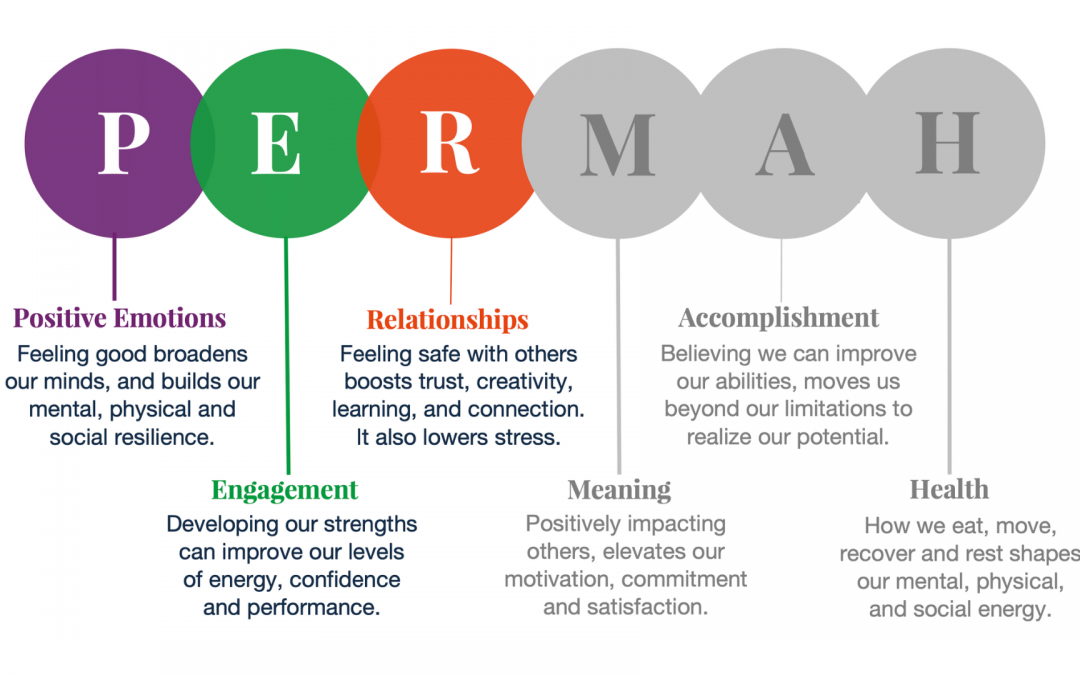
Above image is courtesy of The Wellbeing Lab/Michelle McQuaid Group.


Background

Under Workplace Health and Safety laws, a positive duty to eliminate or control psychosocial hazards has been imposed on all persons conducting a business or undertaking.

This means that the traditional compliance approach of issuing a policy and procedures, providing them to workers, requiring their compliance with them and acting on incidents or breaches when they are reported is not adequate any more.

It is necessary to conduct a thorough risk assessment to see whether any risks from each of the 14 psychosocial hazards in the Model code for managing psychosocial hazards published by Safe Work Australia and as set out in legislation enacted by each State or Territory.

There is also a duty to consult workers at each stage of the process and especially in relation to identifying risks and designing and implementing control plans and measures. 

One way to start addressing both the risk assessment and consultation obligations is to survey workers with an appropriate survey instrument. Our choice to do that is the PERMAH Workplace Wellbeing Survey.

Why have we chosen PERMAH?

The PERMAH workplace wellbeing framework is based on the ground-breaking wellbeing theory developed by Professor Martin Seligman as published in his celebrated work “Flourish”.

The PERMAH survey tool has been used by the Australian Human Resources Institute since 2018 as a national workplace wellbeing benchmarking tool and Small Business Victoria as the centrepiece of its small business wellbeing programs.

A unique feature of the PERMAH Survey is that every person who does the survey gets their own individual State of Wellbeing Report plus a template for developing a wellbeing plan plus access to a heap of wellbeing resources….all for free.

Organisations with 30 or more employees can acquire an annual licence and obtain organisational reports which show the aggregated findings on wellbeing in the organisation through the eyes and experiences of its people.

We have a team of people who have undertaken Certificates in Creating Wellbeing and in Leading Psychological Safety and Care and are accredited to debrief people on their PERMAH Survey results.

With the advent of the positive duty to eliminate or control psychosocial hazards, the survey has been augmented with a panel of additional questions specifically related to each of the 14 psychosocial hazards detailed in Safe Work Australia’s model code.

So we believe that the PERMAH Workplace Survey with the Psychosocial Hazard Panel Add-on ticks all of the boxes – it is science-based, it has credibility being used nationally by AHRI, it is affordable, it provides free and practical wellbeing advice and resources to everyone who does it and it addresses the psychosocial hazards in a practical and cost effective way.

How we can we help

Our “Using PERMAH for Positive Duties” service incorporates the following elements:

  • A 12 month licence for the PERMAH Workplace Wellbeing Survey including the add-on psychosocial hazard panel.
  • Ability to undertake the survey as an organisation multiple times during the licence period.
  • Templates and an animated video for communications to employees on the PERMAH Workplace Wellbeing Survey, why your organisation is doing it and how employees can participate.
  • Professional analysis of survey results, provision of a supplementary report and management debrief on the results.

We have the flexibility to package these elements in a variety of ways and to undertake other services such as individual PERMAH debriefings, training programs and facilitated sessions with leadership groups or consultative or safety committees.

Where to now?

If you would like to learn more about the positive duty to eliminate or control psychosocial hazards and your options for addressing it, we’ll be happy to advise you. Just give us a call on 0438 533 311 or email enquiries@ridgelinehr.com.au.


CONTACT US

Ridgeline Human Resources Pty Ltd
ABN : 24 091 644 094

enquiries@ridgelinehr.com.au

0438 533 311

PARTNER LINKS

TELL US WHAT YOU NEED HELP WITH

Managing disconnection from work

Managing disconnection from work

Latest News & Events

Managing disconnection from work

example flexible working arrangement

The impending legislated right for workers to disconnect from work outside their contracted working hours has the usual subjects again yelling that “the sky is falling” on employers.

The thrust of the proposed changes is to discourage employers from making unreasonable contact with or demands on their employees outside their contracted working hours, to provide for people to be paid for time worked outside their contracted working hours and to have access to the Fair Work Commission to make their employer stop making unreasonable connection with or demands on them outside their contracted working hours if the Commission finds the employer to be doing so.

There will be exceptions such as if the contact is due to an emergency or for welfare purposes. People who have roles that require them to be on call as a normal feature of their job won’t be an issue as long as the connection is reasonable in that context.

It has also been made clear by the Minister that it would be reasonable to contact relevant employees if a worker did not attend work and the employer needed someone to take their place or for normal rostering purposes.

Of course, if the contact is unreasonable, that might well constitute an unreasonable job demand in any case and therefore constitute a risk arising from a psychosocial hazard under Workplace Health and Safety laws.

Do you need to contact your employees outside their contracted working hours?

For the vast majority of workplaces, the answer is probably “no, other than in the case of an emergency or for welfare purposes” – just what the proposed legislative change says.

Sure, there will be times when you are working into the night and want to get an email off to an employee for their  attention when they come in in the morning ….. but you don’t need them to see it tonight so either delay sending it until the morning or use the scheduling facility on your email service for it to automatically go to the employee’s inbox at the start of their day in the morning.

It really is that easy to manage in most cases.

What about if the employee wants a flexible working arrangement?

One of the arguments that the naysayers are putting up is that this right to disconnect will adversely affect employers’ willingness to offer flexible working hours or hybrid working arrangements.

One of the things that should be covered off in the discussions and agreement about a flexible working arrangement is how communications and connection are going to be managed by the employer and the employee.

For example, let’s say a single mum who is an accounts clerk asks for a flexible working arrangement under which she would work from 9.30 am to 2.30 pm each day and from 8.00 pm to 9.30 pm each night so that she could manage her parental responsibilities in the morning up to school drop off time and from school pick up time through to the children’s bedtime. She might come into the office in the day and do the night work from home.

The arrangement with the night work might be that she can perform tasks which do not require interaction with others (eg data entry, accounts processing, etc) but that anything requiring contact with another person is to be done either by a scheduled email issuing the following morning or deferring that item until she came into the office the next day. 

You should Include that communications protocol in the flexible working arrangement agreement to ensure that it is understood and complied with.

And guess what? That pattern of hours of work becomes that employee’s contracted hours of work so there isn’t an issue of a need for that employee to disconnect in any case because they are working.  

Again, it really is that simple to manage in most cases.

Do you really want to be contacting your employees outside their contracted hours?

Because we live in such a digitally connected “look at it now” world, if you send something to an employee outside their contracted working hours, there are many who will not be able to resist having a look.

If, by having a look, that raises something for them that creates some level of anxiety and that in turn interferes with their state of mind and/or their sleep and/or their leisure time/rest and recovery and/or the relationship with their partner……..well, do you really want an anxious, tired, sleep deprived employee coming into work the next day?

The answer should be self-evident.

Other considerations

As noted above, a failure to ensure that there is no unreasonable connection with employees outside their contracted working hours could give rise to risks associated with psychosocial hazards and Workplace Health and Safety laws require employers to exercise a positive duty to eliminate or control such risks. There are a number of psychosocial hazards that could come into play in this regard. We have a blog and explainer video on each of the 14 psychosocial hazards on our website – you can access them here

Additionally, the Fair Work Commission has just begun a review of modern awards with respect to “Work and Care” and the issue of disconnection from work will no doubt be a prominent issue in considerations in that review. See https://ridgelinehr.com.au/award-review-on-work-and-care-underway/

We will keep you informed of further developments as they occur and ensure that we tell you what the real effects of legislative changes are rather than what the scaremongers would have you believe.

If there is anything here that resonates with you and you would like to explore further, give us a call on 0438 533 311 or email enquiries@ridgelinehr.com.au. We would love to have a chat about it.


CONTACT US

Ridgeline Human Resources Pty Ltd
ABN : 24 091 644 094

enquiries@ridgelinehr.com.au

0438 533 311

PARTNER LINKS

TELL US WHAT YOU NEED HELP WITH

Opportunity knocks!

Opportunity knocks!

Latest News & Events

Opportunity knocks!

example flexible working arrangement

So you have new positive duties to eliminate sexual harassment and to eliminate or control psychosocial hazards, right?

And people are telling you that this is another layer of compliance and risk that you have to negotiate as a business owner or manager or find yourself in hot water, right?

What if I told you that, if you really do value and want to care for your people, this is a great opportunity…..to validate what you are doing right as well as to identify ways that you can do it better?

Like most “compliance questions”, it is about your mindset – are your people assets to be cared for or risks to be managed?

What would it look like if we flipped it?

Let’s revisit a few of the psychosocial hazards in Safe Work Australia’s “Model code for managing psychosocial hazards” and picture them as strengths:

  1. The work demands on our people are reasonable physically, psychologically and emotionally
  2. Our people have reasonable control over their jobs
  3. Our people are well supported.
  4. Our people are clear about the roles that they play in our organisation.
  5. People believe that we manage and communicate change effectively.
  6. People believe that they are properly and appropriately recognised and rewarded for the contributions that they make.

And so on for the rest of the psychosocial hazards. 

When you look at them in that way, how many of those statements do you think might be true in your organisation?

Where do you see that there might be opportunities for improvement?

Changing the language can make a real difference to how you look at the subject matter can’t it? 

And guess what – when you see this as an opportunity knocking, you will find it is actually the best way to manage the risks.

How can we help 

We have been encouraging and helping organisations to adopt a positive mindset to improving workplace culture, communications and people practices for many years so, for us, the new positive duty stuff just adds some context to what we have already been doing with our clients. It is nothing new for us and it needn’t be especially challenging for you with the right guidance and support. 

So for us it is just business as usual with a few more tools in the toolkit. 

Need help?

  • Give us a call on 0438 533 311 or email enquiries@ridgelinehr.com.au to arrange your free first consultation to see how we can help with advice and support on this or any other HR matter

CONTACT US

Ridgeline Human Resources Pty Ltd
ABN : 24 091 644 094

enquiries@ridgelinehr.com.au

0438 533 311

PARTNER LINKS

TELL US WHAT YOU NEED HELP WITH

New code on sexual and gender-based harassment adds to the mix

New code on sexual and gender-based harassment adds to the mix

Latest News & Events


New code on sexual and gender-based harassment adds to the mix

example flexible working arrangement

Safe Work Australia has published a new code on sexual and gender-based harassment which makes reference to the positive duty to eliminate sexual harassment and gender-based behaviours that has been legislated nationally under the Sex Discrimination Act. You can access the code here.

It also notes that satisfying your duty under the Sex Discrimination Act doesn’t necessarily mean that you would also satisfy your WHS obligations – for example in relation to the positive duty to eliminate or control psychosocial hazards.

It also makes the point that, if someone is sexually harassed, it is likely that other psychosocial hazards could be in play.

I then got to thinking about all of the different jurisdictions that now have a footprint in the area of sexual harassment and how confusing it must be for people (whether a victim trying to access help or an employer trying to understand their obligations) to work out where to go for what – the picture above tells the story.  

So who does what?

This is what it looks like for Victorian employers and employees.

Firstly, Safe Work Australia which published this code is a national body funded by Commonwealth, State and Territory governments to develop national policy and guidance materials such as codes on workplace health and safety matters. It is not a regulator and has no involvement on complaints or enforcement matters. 

WorkSafe Victoria is the regulator on Workplace Health and Safety matters in Victoria. Complaints of sexual harassment can be made to WorkSafe Victoria and they will investigate such matters in the context of whether there is any breach of WHS obligations.

The Australian Human Rights Commission is an independent authority that investigates complaints about discrimination and human rights breaches. It does accept complaints of sexual harassment and discrimination and can assist in resolution of complaints through a process of conciliation. Since December 2023, it also has inspection and enforcement powers relative to any alleged breaches of the new positive duty on PCBUs including employers to eliminate sexual harassment and other unwanted gender-based behaviour.

The Victorian Equal Opportunity and Human Rights Commission deals with complaints under Victorian Equal Opportunity legislation including those related to sexual and gender-based harassment and provides a voluntary conciliation service.

The Fair Work Ombudsman is the national workplace relations regulator. Part of its role is educational and providing employers and employees on their obligations and rights and legal processes for dealing with such things as sexual harassment. Because there are specific jurisdictions that deal with sexual harassment cases, they are more likely to provide advice on what options a worker has rather than deal with a complaint themselves.

The Fair Work Commission has, for a number of years, had the power to issue “stop sexual harassment orders”. Since March 2023, the Commission has had additional powers enabling it to accept claims of sexual harassment and implement mediation, conciliation and arbitration processes to resolve them.  It is important to note that all workers, not just employees, have access to this jurisdiction.

So what do you do now?

As you can see from the above, this is a very complicated area of law with a variety of pathways that a complainant might take depending on the outcome that they are looking for.

There are a couple of things that all employers need to do. 

Firstly, take the positive duty to prevent sexual and gender-based harassment seriously and ensure that you do what is necessary to meet that duty.

Secondly, ensure that you have access to sound and informed professional advice.

At Ridgeline HR, we can help you with a lot of that and we have a network of specialist lawyers and other professional service providers to assist in complex or specialised areas.

If you would like to explore how we might help you and your business in this or any other area of people compliance and culture, please give us a call on 0438 533 311 or email enquiries@ridgelinehr.com.au to arrange your free first consultation.


CONTACT US

Ridgeline Human Resources Pty Ltd
ABN : 24 091 644 094

enquiries@ridgelinehr.com.au

0438 533 311

PARTNER LINKS

TELL US WHAT YOU NEED HELP WITH

Because it is PEOPLE BUSINESS

Because it is PEOPLE BUSINESS

Latest News & Events


Because it is PEOPLE BUSINESS

example flexible working arrangement

A few months ago, I attended a business breakfast where the owner of a HR consulting business was presenting on the HR essentials that she believed every business needs to nail the HR stuff.

What was put forward was a holy triumvirate consisting of an employee handbook, position descriptions and employment contracts – put them in place and you are covered was the message that she gave. Could it really be that simple?

These are all useful tools and they are all in my toolkit but they are just tools – they aren’t solutions.

So my answer to that question is a resounding “no, it is far from that simple!”.

Over the years, I have spoken with lots of HR practitioners who told me that they can write policies and procedures and employment contracts and job descriptions. When I put on my SMB owner’s hat and ask them why I would want more paperwork, many struggle to answer the question.

You see the problem is that, in the corporate world, these types of document are often seen as solutions rather than what they really are – just tools. The thinking is that we just do a new policy, run an education program to tell people what the new rules are and we have covered things off – problem solved! No it isn’t and this is one of the reasons why the new positive duties to eliminate sexual harassment and psychosocial hazards have been introduced.

SMBs are all about people and relationships – sure you need some process but it is mostly about how a small team works together (provided of course that you give them the right tools to work with).

SMB owners aren’t commonly experts on employment law or relationship management or mental health and well-being or neuroscience and this is the stuff that they really need help with ie it is PEOPLE BUSINESS and quite a range of it.

What should you as an SMB owner be looking for in a HR consultant?

Here are my thoughts – someone who:

  • Knows their stuff when it comes to Fair Work and other employment laws and modern awards and legal due process and
  • Exercises curiosity with emotional intelligence and excellent listening skills to really understand issues and perspectives and
  • Is creative in tailoring the right solutions for the situation, the team and the business and
  • Has the flexibility to wear different hats (eg as a coach or consultant or contractor or counsellor) as appropriate to the situation and
  • Acts with integrity and earns the trust of the business owner and team members and
  • Acts with kindness and compassion to help and support people and
  • Has an established network of quality employment lawyers and other specialists to help with specific issues and
  • Has a sense of humour and enjoys a bit of fun along the way. 

If your HR Consultant ticks all of those boxes, you have a good one.

If they don’t, perhaps you should give us a call on 0438 533 311 to see how we might be able to help you better with your PEOPLE BUSINESS. 


CONTACT US

Ridgeline Human Resources Pty Ltd
ABN : 24 091 644 094

enquiries@ridgelinehr.com.au

0438 533 311

PARTNER LINKS

TELL US WHAT YOU NEED HELP WITH

Is it time to revive “the e2 initiative”?

Is it time to revive “the e2 initiative”?

Latest News & Events


Is it time to revive “the e2 initiative”?

example flexible working arrangement

The “e2 initiative” was a project undertaken by Ridgeline HR Practice Leader, Peter Maguire in association with two quite different organisations that he worked with over a decade ago.

Investors in People Australia was the Australian licensee for Investors in People, a standard of excellence in leadership and development of people originally developed in the UK in the early 1990s. Investors in People is still going strong in the UK and in some other parts of the world albeit that it has never really taken off in Australia.  For further information on Investors in People, see https://www.investorsinpeople.com/. Peter was an accredited Investors in People Specialist who advised and assessed organisations using the Investors in People Standard.

The Australian Institute of Employment Rights (which was created in the WorkChoices era) works to promote the recognition and implementation of employment rights in a cooperative industrial relations framework based on the principles of. the International Labour Organisation.  In 2007, the Institute released The Australian Charter of Employment Rights which sets out 10 fundamental principles on which fair and balanced workplace laws and relationships should be based. There is an accompanying Australian Standard of Employment Rights which provides more detail on how organisations can implement those 10 principles in their workplaces. For further information on The Australian Institute of Employment Rights and its work and publications, go to https://www.aierights.com.au/. Peter was one of the leads for advising and assessing organisations against the Australian Standard of Employment Rights.

What was the “e2 initiative”?

The initiative brought together the two standards – the Investors in People Standard as the measure of “effectiveness” of an organisation and The Australian Standard of Employment Rights as the measure of the “ethics” of an organisation.

The equation:                      ethics x effectiveness (e2) = employee engagement (e2)

The premise for developing the program was that there was a clear disconnect between what we knew then to be best practices in leadership and management of people and what was happening with workplace laws and organisational behaviours and cultures in our workplaces.

The concept was that by bringing the two instruments together we could influence the development of more harmonious workplace relations environments which would also have the dual benefits of improving employee engagement and productivity.

There was also the potential for organisations which implemented the two standards effectively in their workplaces to achieve accreditations as an Investor in People and as an Ethical Employer. 

Are things different today?

In some ways, yes and, in others, no.

LIke then when we were not long into the Fair Work era, we are going through a period of significant legislative change in workplace relations pursuant to the election of a Labor government after years under conservative governments.

Like then, we still have regular reports of large organisations underpaying wages and entitlements and in many cases they are simultaneously harvesting record profits.

We have had inquiry after inquiry making findings of culpable corporate misconduct in so many different jurisdictions.

We also still have peak bodies for unions and employers being openly combative when it comes to any proposed changes to employment rights and workplace relations laws. 

Like today, leadership experts were urging our managers to be accountable, be compassionate, be engaging, be vulnerable and be collaborative. On the other hand, they were being told to  manage risk, reduce costs and maximise profits and they were being rewarded for that. It was the latter that provided organisations’ policy settings.

So there is a lot that really hasn’t changed much at all.

The advent of positive duties

The penny has dropped that the traditional compliance/risk management model as applied by most organisations doesn’t work. 

The positive duties that organisations must now meet in relation to elimination of sexual harassment and psychosocial hazards have been introduced for that reason – it isn’t just about changing policies, it is about bringing about real changes in behaviour – by individuals and work groups and organisations and everyone whom we interact with in the course of the work that each of us do. We all have a role to play in that.

That was exactly what the “e2 initiative” was about – changing workplace behaviours in partnership with all of the people in a workplace.

Need help?

Interested in exploring ways in which we might be able to help you to deal with your new positive duties? Give us a call on 0438 533 311 to arrange your free first consultation to see how we can help with advice and support on this or any other HR matter. 


CONTACT US

Ridgeline Human Resources Pty Ltd
ABN : 24 091 644 094

enquiries@ridgelinehr.com.au

0438 533 311

PARTNER LINKS

TELL US WHAT YOU NEED HELP WITH